Open-source IoT sensors for groundwater monitoring · ESP32 · LoRa/Cellular · Solar powered
WX-Level
WX-Flow
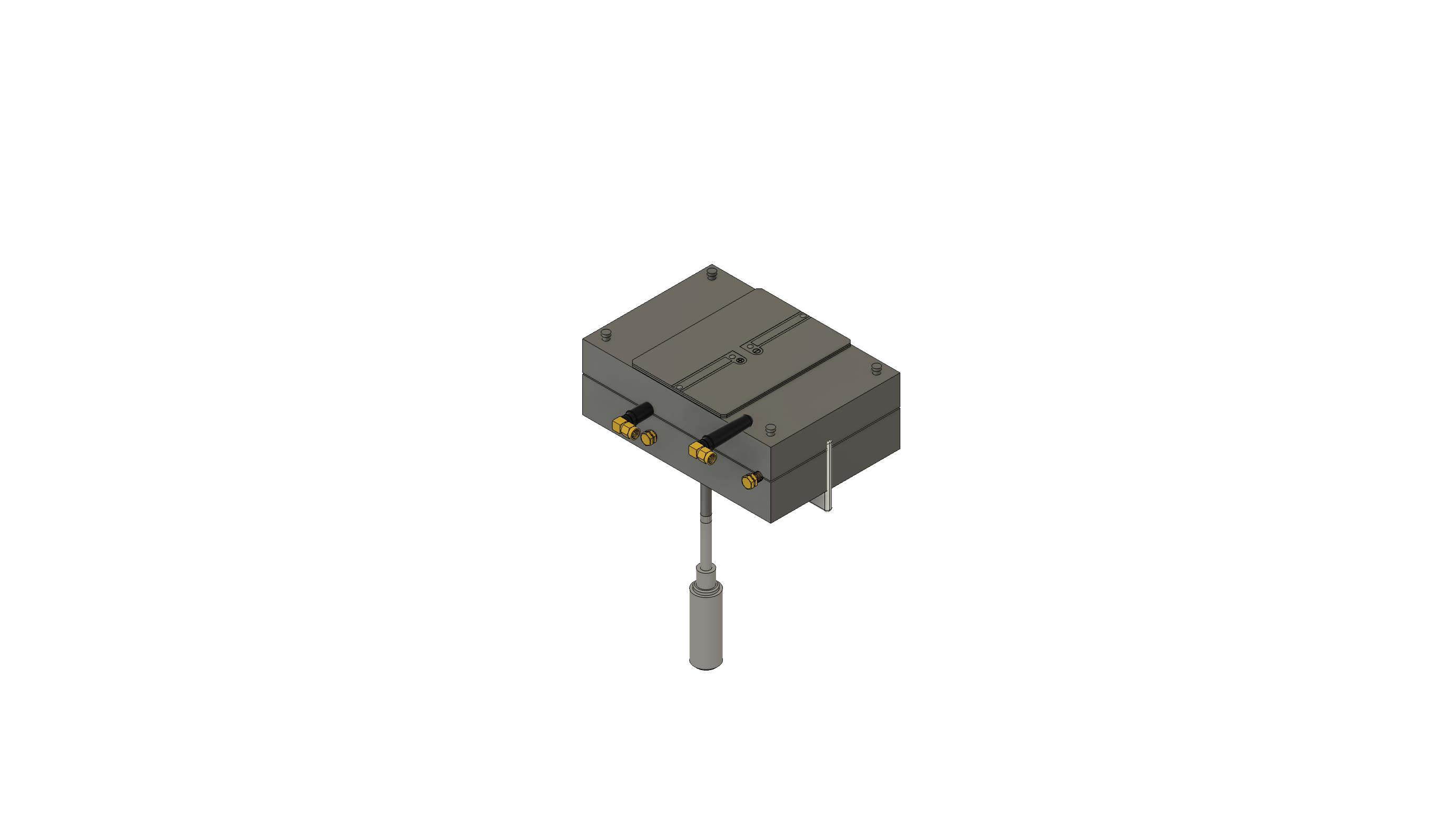
WX-Level — Smart Well Level Meter
Submersible pressure transducer + solar-powered ESP32 controller for continuous groundwater level monitoring. Mounts on any monitoring or irrigation well. Transmits water level, temperature, and battery status every 15 minutes via LoRa or cellular to the WaterXchange cloud.
Combined groundwater flow velocity/direction + water quality probe. Uses heat pulse technology (like AquaVector/iFLUX) with a 4-thermistor array to measure Darcy velocity and flow direction, plus conductivity/TDS and temperature sensors. Designed to fit inside a standard 2" or 4" monitoring well.
Reference designs: iFLUX (Belgium) — microfluid flow chip, 0.5–500 cm/day, ±7° direction. AquaVector (Netherlands) — heat pulse + thermistor array, up to 50m wells. Our approach uses the heat pulse method (simpler to manufacture than iFLUX's microfluidic chip) with off-the-shelf thermistors.
Specifications
Flow Velocity
0.5–200 cm/day
Heat pulse + 4-thermistor array
Flow Direction
360° ± 10°
4 thermistors at 90° spacing
Conductivity
0–100,000 µS/cm
4-electrode cell, ±2%
TDS
Derived from conductivity
Factor 0.5–0.7 configurable
Temperature
0–50°C ± 0.1°C
PT1000 RTD
Water Level
0–100 ft
Integrated pressure sensor
Probe Diameter
45 mm (1.77")
Fits 2" well casing
Probe Length
300 mm (12")
Sensor section only
Well Depth
Up to 100 ft (30 m)
Limited by cable length
MCU
ESP32-S3
Same as WX-Level for shared firmware
Connectivity
LoRa + Cellular
Surface controller box (shared design with WX-Level)
Target BOM
~$140
At qty 100
How the Heat Pulse Flow Sensor Works
1. A small heater element (nichrome wire, 2W) at the center of the probe heats the surrounding groundwater for 3–5 seconds.
2. Four thermistors (NTC 10kΩ) are arranged at 90° intervals around the heater, 15mm away from center.
3. As groundwater flows past, it carries the heat plume preferentially toward the downstream thermistor.
4. The thermistor that sees the fastest temperature rise indicates flow direction.
5. The time delay between the heat pulse and the peak temperature at the downstream thermistor gives flow velocity (shorter delay = faster flow).
6. Calibration curve maps delay time → Darcy velocity in cm/day.
7. Measurement cycle takes ~60 seconds. Repeated every 15 minutes.
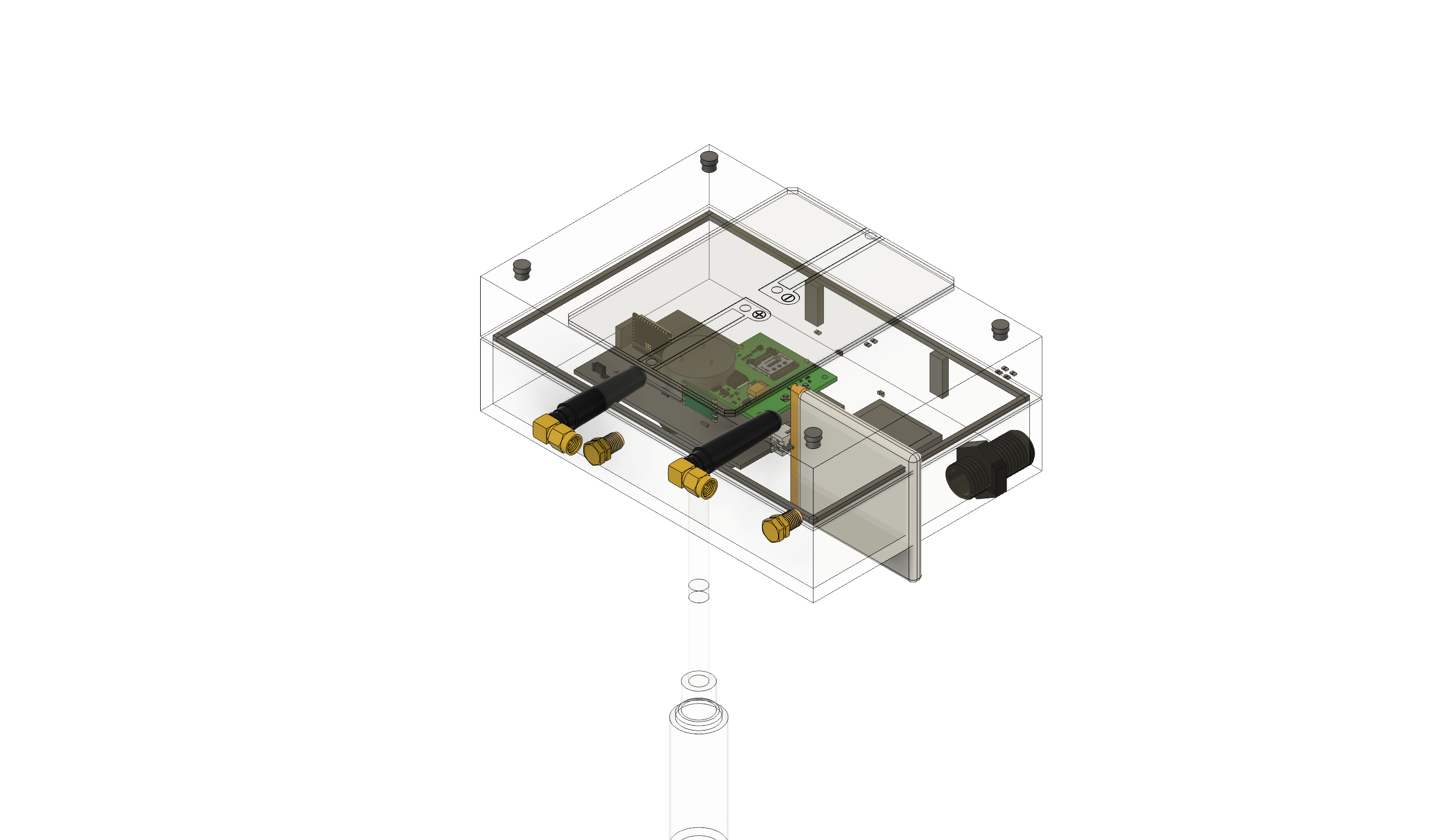
This is your part. Two pieces to model: the submersible probe body (cylindrical) and the surface controller box (identical to WX-Level box — just add one more cable gland).
Part A: Submersible Probe Body
Cylindrical tube that goes down the well. Houses the heater, thermistors, conductivity cell, pressure sensor, and PT1000. Both ends are epoxy-potted after assembly.
Outer Diameter
45 mm (fits 2" well casing)
Total Length
300 mm
Wall Thickness
2.5 mm
Top Cap
Cable entry with M12 connector or epoxy pot
Bottom Cap
Pressure sensor face (open to water)
Flow Slots
8× vertical slots, 60mm long × 5mm wide, evenly spaced around mid-section
Slot Purpose
Allow groundwater to flow through probe for heat pulse measurement
Heater Mount
Central post, 10mm dia × 40mm tall, centered in flow chamber
Thermistor Mounts
4× radial posts at 90°, 15mm from center, 3mm dia holes
Conductivity Cell
Recess at bottom of flow chamber, 20mm dia × 30mm deep
Material
PETG (or POM/Delrin if available)
Sealing
Epoxy potting compound on both ends after wiring
Part B: Surface Controller Box
Identical to the WX-Level controller box but with one additional cable gland for the 12-conductor probe cable. Same PCB layout with an added second ADS1115 for thermistor channels.